The most common mistake on siding is turning the pressure up. It is also the most expensive one.

Advice · EKL Cleaning
Written by the EKL Cleaning team
Reviewed by the owner of EKL Cleaning · Updated
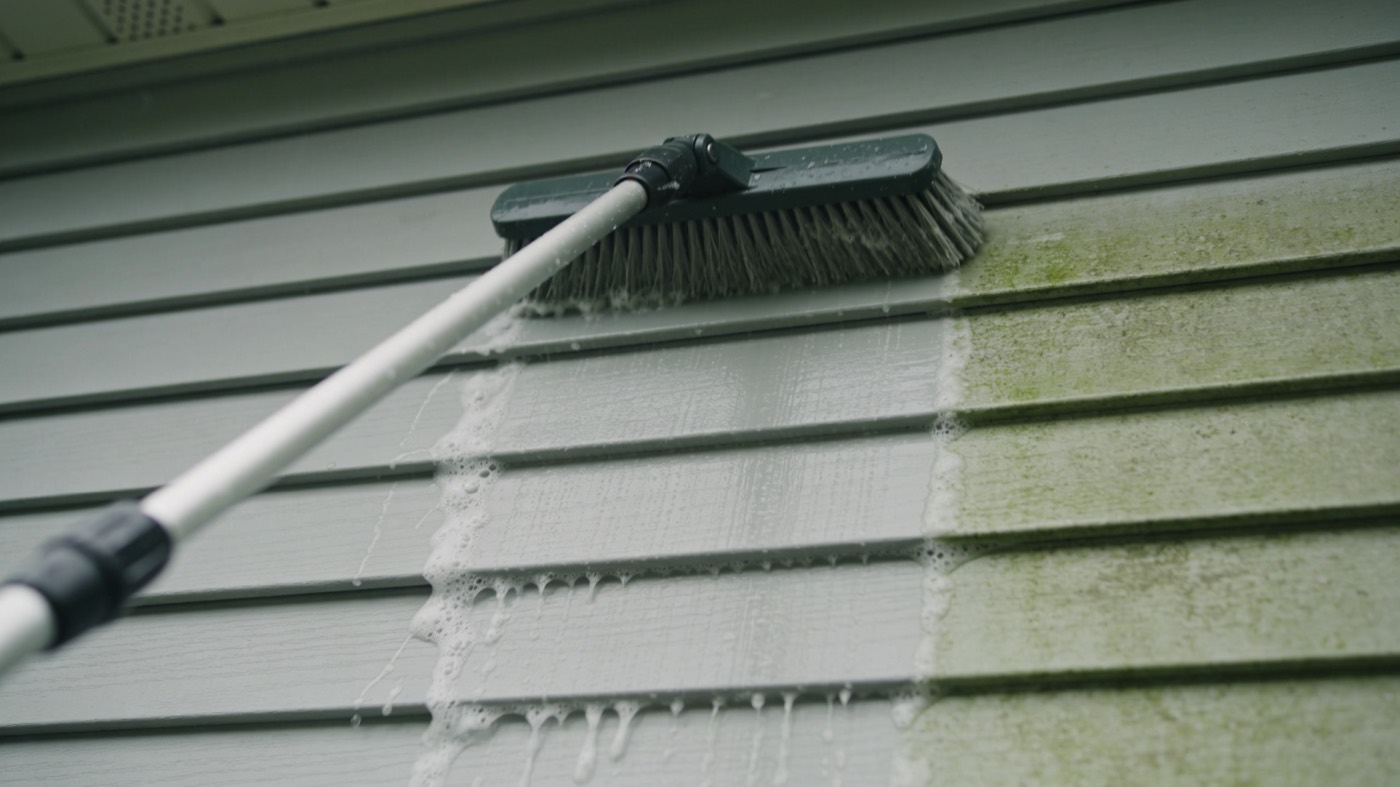
To clean vinyl siding without damaging it, wash it by hand with mild soap and water or with a low-pressure soft wash, work in small sections from the bottom up, and rinse from the top down. Keep any pressure washer stream level with the panel rather than angled upward, because water forced up behind the courses has no way to dry out.
Vinyl siding is the surface we get called about most on exterior work, and it's the one people most often damage themselves. The damage rarely shows up the day it happens. It turns up as a stain on an interior wall a season later.
Here's what actually breaks siding, what the people who manufacture it say to use, and the method we run on a Metro Vancouver house wash.
Three things damage vinyl siding during a clean: too much pressure, the wrong spray angle, and the wrong cleaning product. Pressure gets the blame, and angle is the one that causes the expensive failures.
Vinyl is thin and it gets brittle as it ages, especially on a south wall that's had twenty years of sun on it. A concentrated stream at close range cracks it, and older panels can shatter around the nail line rather than dent.
People reach for the pressure washer because they've watched one strip years of grime off a concrete driveway in a single pass. Concrete is a solid slab. Siding is a thin skin hung in overlapping courses with a wall behind it, and the two have nothing in common besides being outside.
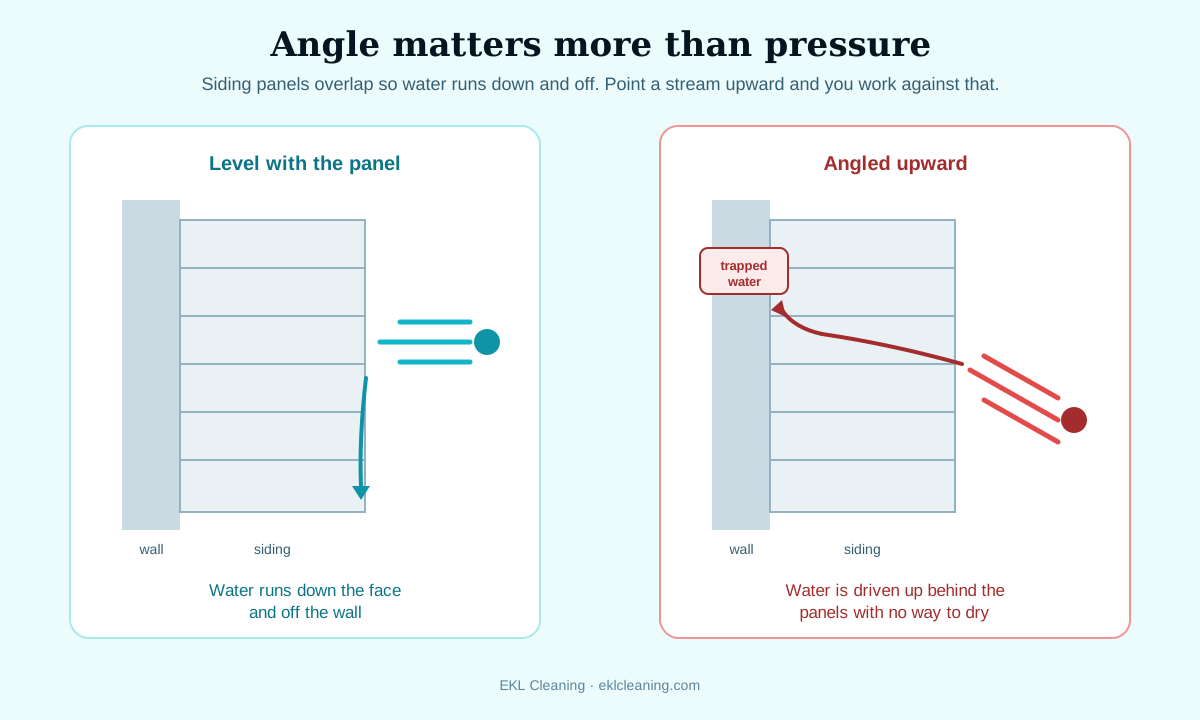
Siding panels overlap like roof shingles so that water runs down and off. Point a stream upward and you're working directly against that design, pushing water up behind the courses into the wall cavity.
The industry guidance is specific about this. The trade association for vinyl and polymeric siding tells you to hold the washer straight at eye level and warns that aiming the stream upward "can force water behind the siding panels" (Polymeric Exterior Products Association).
Water behind siding sits against sheathing and insulation in a climate that stays damp for months. That's how a cleaning job turns into a moisture problem, and it's why the bill arrives long after the day you thought went fine.
The same association names what to avoid outright: cleaners containing organic solvents, undiluted chlorine bleach, liquid grease remover, nail polish remover, and furniture polish or furniture cleaners. Those attack the surface of the panel itself.
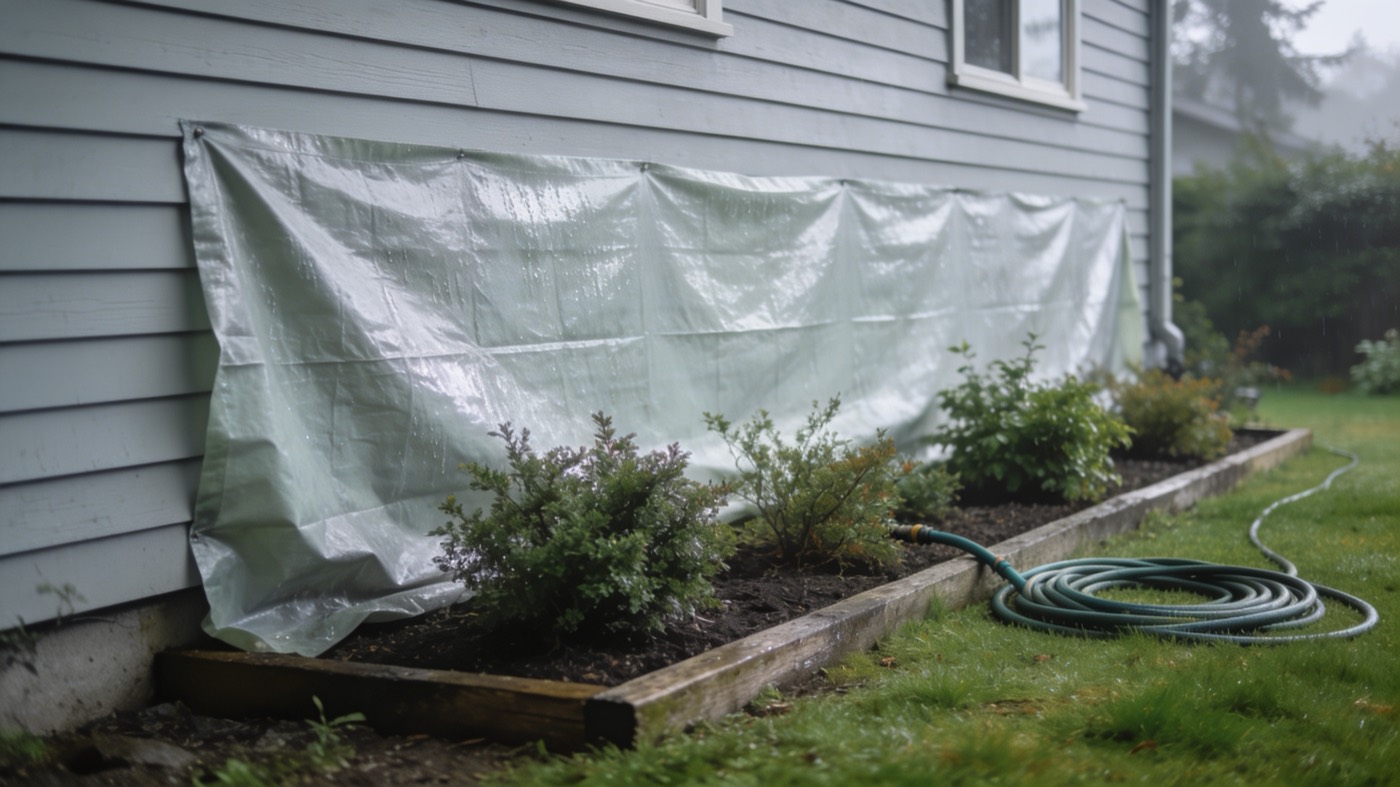
Anything you spray onto a wall also runs down into whatever is planted underneath it. Product choice matters as much as pressure does, and the garden is usually the first thing to show you got it wrong.
On this side of the mountains, what dulls a wall is usually not dirt. It's algae, moss and mildew taking hold in a climate that stays damp for most of the year, layered over road grit, pollen and general surface staining.
That distinction decides your whole approach. Dirt is a physical layer you can rinse off. Algae and mildew are living growth with a root structure into the surface, and the way you remove them is to kill the growth first and then rinse it away.
This is exactly why pressure is the wrong lever. Turning it up moves your siding around while the growth stays where it is, and you'll be looking at the same green tint within months.
If your green is heaviest on the north wall and light everywhere else, you have a growth problem rather than a dirt problem, and no amount of pressure will fix it.
For general cleaning, mild soap and water off a garden hose handles most of a wall. The association also names specific products it considers safe: Simple Green, Nice & Easy and Armor All for general work, and for mould or mildew spots, Fantastik, Windex, or a solution of 30 percent vinegar to 70 percent water (Polymeric Exterior Products Association).
For tougher stains it points to Lestoil, Murphy Oil Soap and Soft Scrub. Test any of these on a small, low, out-of-sight patch first and give it a day before you commit to the whole wall.
One caution the same guidance makes and most homeowners miss: siding manufacturers differ. Some do not recommend power washing at all, and others set limits on pressure and on which cleaners are allowed. If you know your siding brand, its own instructions outrank any general advice, including ours.
Some products damage the panel surface itself, and the damage is permanent. Keep all of the following off vinyl siding:
Strong cleaners also strip finish off anything painted nearby, including trim, railings, doors and window frames. A wall wash that takes the sheen off your trim has cost you more than it saved.
Hand washing is the safest method and it's realistic for a single-storey wall or a section of a larger one. You need a bucket, mild soap, a soft-bristle brush on an extension pole, and a garden hose.
Applying from the bottom up and rinsing from the top down is the part people get backwards. Solution running down a dry wall leaves streaks that set and are harder to remove than what you started with.
Yes, carefully, and the angle matters more than the number on the dial. Hold the wand level with the panel at eye height, keep the stream straight on, and never point it upward under a course.
One safety note before you pick up a wand. The spray from a pressure washer can cause serious wounds that first look minor, which is how people end up delaying treatment (CDC, 2024). Never point one at yourself or anyone else, keep children well back, and wear closed shoes with grip.
If your siding is older, if you can see any cracked or lifted panels, or if you are working above the first storey, hand washing or a soft wash is the safer call every time.
Soft washing uses low pressure plus the right cleaning solution instead of force. The solution breaks down the algae and mildew, a gentle rinse takes it off, and the panels, the seals and the wall behind them stay exactly as they were.
It's the method that fits this climate, because our problem is living growth rather than caked dirt. Killing the growth means the wall stays clean for far longer than a pressure blast that only knocks the surface off.
Matching the method to the surface is most of the decision when we quote a house wash, so every quote is customized to the property in front of us. Cedar, vinyl and painted surfaces get a soft wash. Concrete, pavers, walkways and a garage floor can take real pressure, and our team does both on the same job with different settings.
Our exterior cleaning and pressure washing service covers siding, driveways, walkways, patios, decks, fences and garage floors, and the pressure changes surface by surface.
Everything you take off the wall ends up on the ground, so the prep is as much about what's under the siding as the siding itself. Walk the wall before anything gets wet.
The worst outcomes from a siding wash are the ones that stay invisible on the day. Water driven behind a panel doesn't announce itself. It sits in the wall through a wet Vancouver winter and shows up as a stain, a musty smell, or soft drywall the following year.
Surface damage hides too. A scoured or scratched patch of vinyl looks fine while it's wet and then dries dull, and because the finish is gone it holds dirt faster than everything around it. Twelve months later that patch is the dirtiest part of the wall.
Heavy staining is also usually worse than it looks from the ground. On one exterior job we found the built-up staining ran far deeper than the quote had assumed from a distance. We stopped, explained what we'd found, adjusted the approach, and finished it properly with no surprise on the invoice.
It's the reason we look at a siding job in person before we price it. A wall reads very differently from six feet away than it does from the street, and a customized quote depends on seeing what is actually on it.
Exterior washing takes longer than people expect, and the reason is the water. Everything that comes off the wall goes onto the ground, and dealing with that runoff properly is part of the job rather than an afterthought.
A modest single-storey wall is an afternoon by hand. A full house wash on a larger property runs into multiple days once prep, sectioning, rinsing and runoff cleanup are counted. Budget the time before you start, because the runoff is the part that always takes longer than people plan for.
Once a year suits most homes in this region, usually late spring once the wet months have finished feeding the growth. Houses with heavy tree cover, north-facing walls or a shaded lot often want it twice.
The signal to watch for is the green tint returning to the shaded walls. Waiting until the whole house looks dull means the growth has had time to bed in, and a bedded-in wall takes a longer, more careful clean than a wall caught early.
| Do this | Never do this |
|---|---|
| Hold any spray level with the panel | Angle a stream upward under a course |
| Mild soap and water, or a soft wash | Undiluted bleach or solvent cleaners |
| Apply from the bottom up | Apply top down onto dry siding |
| Rinse from the top down | Let solution dry on the surface |
| Soft-bristle brush along the panel line | Scouring pad, wire brush or circles |
| Wet and cover the plants first | Spray the wall and hope for the best |
| Widest fan tip, wand always moving | Pinpoint or turbo nozzle held still |
| Check your siding brand's own instructions | Assume all vinyl takes the same treatment |
Mild soap and water off a garden hose handles most walls. The siding trade association also names Simple Green, Nice & Easy and Armor All as safe for general cleaning, and a mix of 30 percent vinegar to 70 percent water for mould and mildew spots. Test anything on a small hidden patch before you do the whole wall.
Keep organic solvents, undiluted chlorine bleach, liquid grease remover, nail polish remover, and furniture polish or cleaners off vinyl entirely. All of them can damage the surface of the panel, and the damage does not come back out. Abrasive pads and wire brushes leave dull scratched patches that then hold dirt.
Yes. A few tablespoons of dish soap in a bucket of warm water is a mild, safe cleaner for general dirt and it is close to what the manufacturers describe as soap and water. It will not remove established algae or mildew on its own, which needs a solution that kills the growth rather than just lifting dirt.
For siding in a damp climate, yes. Soft washing uses low pressure and a cleaning solution that kills algae and mildew at the root, so the wall stays clean longer and the panels are never stressed. Pressure washing is the better tool for concrete, pavers, walkways and garage floors, where the surface can take it.
We start by checking the wall for cracked or loose panels, protecting the plants and covering what sits underneath, then apply a cleaning solution matched to the surface at low pressure. We work in sections from the bottom up, rinse from the top down before anything dries, and clean up the runoff at the end. Higher walls and second storeys are done from a pole rather than a ladder.
Once a year suits most homes here, usually late spring. Properties with heavy tree cover, deep shade or exposed north walls often want it twice a year, because the growth comes back faster where the wall stays damp.
It can, if the plants go in dry and uncovered. Soak the beds with plain water first and cover them with a light tarp, then rinse everything down again once the wall is finished. Choosing a mild solution rather than a harsh one does most of the protecting.
We would not recommend it. Ladder work on damp ground is the most common way people get hurt on this job, and holding a wand at an awkward angle from a ladder is exactly how water ends up driven behind a panel. Second-storey walls are worth handing over.
Don't point high pressure at vinyl siding, and never angle a stream upward under a panel. Use mild soap and water or a low-pressure soft wash, apply from the bottom up and rinse from the top down, and check your own siding brand's instructions before you pick a product.
Walk the wall first, protect the plants, and think about where the runoff goes. If the growth is heavy, the panels are old, or the wall is above the first storey, that's the point where handing it over costs less than the repair does.
We wash exteriors across Vancouver, North Vancouver, West Vancouver and the rest of Metro Vancouver, and we're fully insured. A free quote takes a phone call.